Get the Bambu Lab A1 if:
- You print PLA, PETG and TPU.
- You want the lighter, open-frame printer.
- You don’t need ABS or ASA.
3D printers · Comparison
The short answer
Our overall pick: the Bambu Lab P1S, because its enclosure and filter let it print more filament types.
PLA and PETG on an open, lighter printer? A1
ABS, ASA and an enclosed printer? P1S
Both print up to 256 x 256 x 256 mm at up to 500 mm/s with an all-metal 300°C hot end and a 100°C bed. The P1S adds an enclosure with an activated carbon filter, doubles the acceleration and lists ABS, ASA and PET as ideal filaments, with PA and PC as capable. The A1 is the lighter open-frame printer for PLA, PETG and TPU.
Best for PLA and PETG
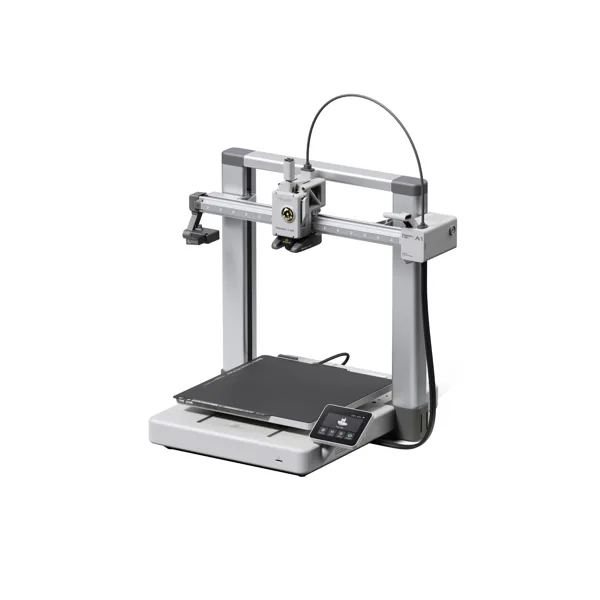
The Amazon listing (model PF002-A) is sold by Bambu Lab Store and ships from Amazon. It also offers an A1 Combo + LED Kit; pick the plain A1 if you don’t want the bundle.
See the A1 on Amazon Check the A1 at BambuBest for ABS, ASA and enclosed printing
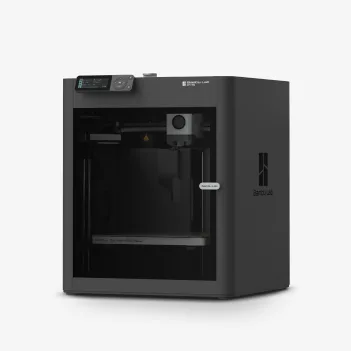
The Amazon listing (item model P1S) is sold by Bambu Lab Store. It also offers a P1S Combo with AMS; pick the plain P1S if you don’t want the AMS.
See the P1S on Amazon Check the P1S at BambuBefore you buy: Bambu Lab suggests leaving 500 x 500 x 950 mm of space for the P1S. Multi-color printing needs an AMS (P1S) or AMS lite (A1), sold separately or in a Combo. Listings change, so check the model and what’s in the box before you order.
As an Amazon Associate I earn from qualifying purchases. I may also earn a commission from Bambu Lab links.
The P1S wins on acceleration, max flow, enclosure and filaments. The A1 wins on sensors, screen and weight. Build volume, top speed, hot end and bed temperature are the same.
A green check marks the clearly better spec for most people. No check means a tie, a gap that depends on how you work, or a spec marked Unknown. Figures come from Bambu Lab’s spec pages, US store page, wiki and P1S Quick Start guide; Amazon-only facts are labeled.
| A1 | P1S | |
|---|---|---|
| Build volume | 256 x 256 x 256 mm | 256 x 256 x 256 mm (Bambu Studio default height 250 mm) |
| Max speed | 500 mm/s | 500 mm/s |
| Acceleration | 10,000 mm/s² | 20,000 mm/s² |
| Max flow | 28 mm³/s (Bambu ABS test) | 32 mm³/s (same ABS test, Bambu wiki) |
| Hot end | All-metal, up to 300°C | All-metal, up to 300°C |
| Max bed temp | 100°C | 100°C |
| Nozzle | 0.4 mm stainless (0.2/0.6/0.8 optional) | 0.4 mm stainless (0.2/0.6/0.8 optional) |
| Extruder | Hardened steel gears; filament cutter (drive type not listed) | Direct drive; steel gears (Bambu wiki) |
| Enclosure | Open frame | Enclosed, activated carbon filter |
| Multi-color | One AMS lite (4 colors); full AMS units need the AMS Hub | AMS, up to 16 colors with 4 units; AMS 2 Pro compatible |
| Ideal filaments | PLA, PETG, TPU, PVA | PLA, PETG, TPU, PVA, PET, ABS, ASA (PA, PC capable) |
| Sensors | Camera up to 1080p (low frame rate), runout, odometry, tangle, power-loss recovery | Camera 1280 x 720 at 0.5 fps, runout, power-loss recovery (odometry with an AMS) |
| Screen | 3.5 in touch (320 x 240) | 2.7 in, 192 x 64, button control (plus app and PC) |
| Max power at 110 V | 350 W | 350 W |
| Size | 465 x 410 x 430 mm | 389 x 389 x 458 mm (500 x 500 x 950 mm space suggested) |
| Weight | 8.3 kg (18.3 lb) | 12.95 kg (28.6 lb) |
| Warranty | 2 years (US) | 2 years (US) |
Common print jobs, judged only from Bambu Lab’s build volume, enclosure and filament lists.
| Job | A1 | P1S |
|---|---|---|
| Print size | ||
| Part up to 250 mm | Can do256 mm build volume. | Can do256 mm build volume; Bambu Studio defaults to 250 mm height. |
| Filaments | ||
| PLA, PETG or TPU | Can doListed as ideal. | Can doListed as ideal. |
| ABS or ASA | Can’tNot recommended by Bambu Lab. | Can doListed as ideal. |
| PA or PC | Can’tNot recommended by Bambu Lab. | Just barelyListed as capable, not ideal. |
| Carbon-fiber filament | Can’tNot recommended. | Just barelyNot recommended without a hot end and extruder upgrade. |
| Extras | ||
| Multi-color prints | Just barelyNeeds the AMS lite. | Just barelyNeeds an AMS; up to 16 colors with 4 units. |
| Filtered enclosure | Can’tOpen frame. | Can doEnclosed with an activated carbon filter. |
Sources: bambulab.com US A1 tech-spec page; us.store.bambulab.com P1S page; the Bambu wiki P1S unboxing page, P1 FAQ and A1 FAQ; Bambu Lab’s US warranty policy (updated September 22, 2026); bambulab.com/en-us/p1 and Bambu Lab’s P1S Quick Start PDF. Checked November 11, 2026.
As an Amazon Associate I earn from qualifying purchases. I may also earn a commission from Bambu Lab links.
Skip it if you want to print ABS, ASA, PC or PA: Bambu Lab lists them as not recommended on the A1.
Skip it if you only print PLA and PETG and want the lighter printer; the A1 matches its build volume and top speed.
Both top out at 500 mm/s. The P1S lists 20,000 mm/s² acceleration against 10,000 mm/s² for the A1.
Bambu Lab lists ABS, ASA, PC, PA, PET and carbon- or glass-fiber filaments as not recommended for the A1. It lists ABS and ASA as ideal for the P1S, with PA and PC as capable.
Yes, 256 x 256 x 256 mm. Bambu Lab notes that Bambu Studio defaults the P1S to 250 mm height.
No. The Bambu wiki lists a 2.7 in, 192 x 64 screen on the P1S, controlled with buttons, the Bambu app or a PC. The A1 has a 3.5 in touchscreen.
The P1S takes up to 4 AMS units, for 16 colors. The A1 takes one AMS lite (4 colors); full-size AMS, AMS 2 Pro and AMS HT units need Bambu Lab’s AMS Hub.
No. Bambu Lab’s P1 FAQ says the chamber isn’t actively heated; it warms from the heatbed and can’t be precisely controlled.
Around 48 dB in silent mode, per Bambu Lab’s A1 FAQ. Bambu Lab doesn’t publish a P1S noise figure on the pages we checked.
2 years for US consumers under Bambu Lab’s warranty policy (updated September 22, 2026). Some parts have a 3-month term, and consumables have no warranty term. Units bought from the Bambu Store US/CA that were still in their original 1-year window on August 14, 2026 were extended to 2 years. The same policy covers both printers.
The P1S adds a full enclosure, an activated carbon filter and auxiliary, chamber and control-board fans as standard, and lists ABS and ASA as ideal. Bambu Lab says the P1P reached end of life on February 10, 2026.